
July 2026 Newsletter
Dear HVTT Forum subscribers,
Welcome to the latest regional update from the HVTT Forum. Being summer and winter holidays, I invite you for a South American tour of what is going on in the heavy road transport in the region. From high-altitude mining routes in the Andes to heavy agricultural corridors in Brazil, operators and regulators are trying out and/or fully embracing High Productivity Heavy Vehicles (HPHVs) and alternative powertrain technologies. So here are a few key updates:
Argentina: 75-Ton, 25-Meter B-double Conquers the High Andes
On July 22nd, a 75-tonne Gross Combination Mass (GCM), 25-meter B-double successfully completed a challenging transport mission, delivering commercial explosives directly to a high-altitude mining site in the province of San Juan at nearly 5,000 meters above sea level. This trip, the first of many to come, was possible because of the National Resolution from August 2025 which eliminated many of the restrictions by the “positive exclusion” practice (see the August 2025 Newsletter).
Why challenging? The La Puna triangle is not for the faint hearted (August 2023 newsletter). Extreme altitude, reduced engine power output, steep inclines, unpaved, narrow mountainous passes with hairpin curves and precipices, severe erosive processes due to blistering winds, frequent and intense frosts, ice on the road and solidified narrow creeks which can alter road position and conditions on a near daily basis, with free roaming animals and tourists in light vehicles and motorbikes. Fortunately, the multinational mining companies’ sustainable commitments have translated locally in the dissemination of the benefits the use of safe and productive heavy vehicle transport technologies and systems have for the local population.
Brazil: Green Corridors with Biomethane
Brazil’s heavy transport sector pairs 91-ton Gross Total Combined Weight (PBTC) high-capacity road trains (CVC in Portuguese) such as 11-axle “Rodotrems” and “Super-Bitrems” with heavy-duty trucks running on 100% renewable biomethane derived from sugarcane and organic waste. Major logistics initiatives (such as Copersucar’s BioRota) use biogas-powered heavy vehicles to haul heavy loads from the interior of São Paulo down to the Port of Santos, cutting millions of liters of diesel usage. These vehicles, piloted since 2019, are now a reality.
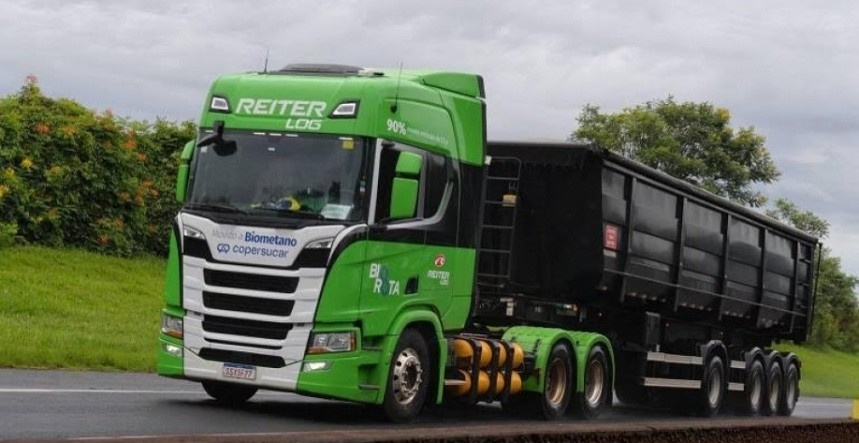
Copersucar’s gas-powered BioRota, operating between São Paulo down and the Port of Santos
Chile: Hydrogen & Electrification in Heavy Mining Fleets
Chile’s transport ministry (MTT) and mining council are expanding green transport corridors along the steep descent from Andean copper mines to Pacific ocean ports. Chile is transforming its heavy mining fleets through green hydrogen and direct electrification, led by key strategies like the National Green Hydrogen Strategy and state mining adoption via Codelco. Following successful pilots of heavy-duty electric trucks in port environments, Chile is testing hydrogen fuel cell (FCEV) tractors designed specifically for high-GCM combinations navigating high-altitude topographies.
About the weather…
Winter in the Andes has been especially harsh this year, and not all vehicles and drivers are familiar with the conditions or prepared for them. Rescue teams involving local police, civil protection, firefighters, road safety crews, local neighbours (baqueanos), and mining company teams successfully located and evacuated workers and over 100 tourists from freezing to death. Installing simple and well-known technologies, such as the auxiliary engine-off heaters that work over 4500 meters above sea level and satellite communications are a must, not a luxury.
Have a lovely weekend all,
Dr. Alejandra Efron
HVTT Forum Vice-President: South and Central America


